

Conference Details
About the Conference
The 2026 International Conference on Innovation of Emerging Communication and Information Technology (ICIEICT’ 2026) is devoted to communication, computer science, electrical and electronics engineering, telecommunication engineering and information technology that will take place from December 4 -7, 2026 in Athens, Greess. ICIEICT’2026 is intended to provide a forum for research scientists, engineers, educators, and practitioners throughout the world to learn, share knowledge, publish, and disseminate the most recent innovations and developments, ideas, and applications in all fields of science, technology and information technology. ICIEICT’2026 will feature keynote addresses by eminent scientists , professors and engineers.
The focus of the 2026 International Conference on Innovation of Emerging Communication and Information Technology (ICIEICT’2026) revolves around communication, computer science, electrical and electronics engineering, telecommunication engineering, and information technology. The conference encompasses diverse topics within the field, such as computer science and engineering, computer networks and cloud computing, cybersecurity and privacy, robotics, cyber-physical systems, Internet of Things (IoT), artificial intelligence, machine learning, deep learning, big data analytics, augmented reality/virtual reality/mixed reality (AR/VR/MR), metaverse, and the social and ethical issues associated with information and communication technology (ICT).
A unique feature of ICIEICT2026 is the opportunity for authors to publish a paper in a peer-reviewed journal. ICIEICT2026 offers a fast publication schedule whilst maintaining rigorous peer review; all articles must be submitted online, and peer review is managed fully electronically via the Microsoft CMT system. Papers submitted to ICIEICT2026 undergo a regular ICIEICT2026 and peer-reviewed journal review. This conference provides dedicated tracks with identified journals that expedite the process of publication. Papers sent to this conference should have the same academic level and quality as those sent to journals. ICIEICT2026 is committed to the principle that all participants shall have equal access to programs, facilities, services, and employment without regard to personal characteristics not related to ability, performance, or qualifications.
Conference Chairs
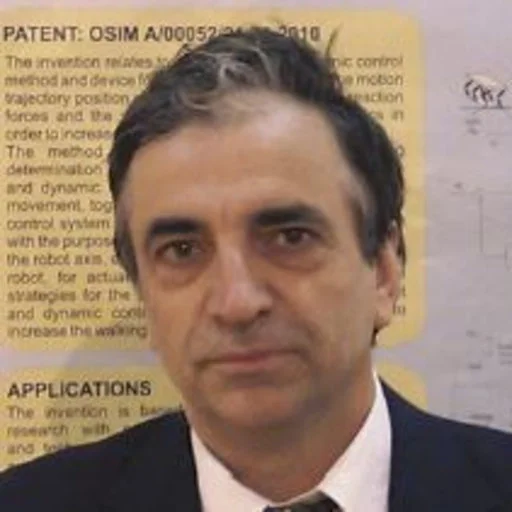
Prof. Luigi Vladareanu
Conference General Chair
Institute of Solid Mechanics of Romanian Academy, Romania

Prof. Zelalem Mengistu
Co-chair
Bay Atlantic University (BAU)
Washington, D.C, USA

Prof. Klimis Ntalianis
Local Chair
University of West Attica, Greece
Technical Program Committee
| Member | Affliation | Country |
| Prof. Qing Tan | Athabasca University | Canada |
| Prof. Luigi Vladareanu | Institute of Solid Mechanics of Romanian Academy | Romania |
| Prof. Dr. Ibrahiem El Emary | King Abdulaziz University | Saudi Arabia |
| Prof. Dr. Radu Munteanu | echnical University of Cluj- Napoca | Romania |
| Prof. Junzo Watada | Waseda University | Japan |
| Prof. Latif Ladid | University of Luxembourg | Luxemberg |
| Prof. Abdel-Badeeh M. Salem | Ain Shams University | Egypt |
| Prof. Dr. Dina M. Ibrahim | Qassim UniversityA | Saudi Arabia |
| Prof. Victor Vladareanu | Institute of Solid Mechanics of Romanian Academy | Romainia |
| Prof. Dr. Hongnian Yu | Edinburgh Napier University | UK |
| Prof. Dr. Zeng-Guang Hou | Chinese Academy of Sciences | China |
| Prof. Dr. Hongbo Wang | Fudan University | China |
| Prof. Dr. Yongfei Feng | Ningbo University | China |
| Prof. Sami Hasan | Al-Bayan University | Iraq |
| Dr. Asma Alhamadi | Education Technology Department, King Khalid University | Saudi Arabia |
| Dr. Eva R. Porras | Universidad Rey Juan Carlos | Spain |
| Dr. Abdelkrim Zitouni | Imam Abdulrahman bin Faisal University | Saudi Arabia |
| Dr. Salim EL KHEDIRI | Qassim University | Saudi Arabia |
| Dr. Wael Yafooz | Computer Science Department, Taibah University | Saudi Arabia |
| Dr. Elrasheed Ismail M. Zayid | University of Bisha | Saudi Arabia |
| Dr. Elmissaoui Taoufik | Higher Institute of Transport and Logistics of Sousse | Tunisia |
| Ass. T. Yaqeen Saad Ali | Anbar University | Iraq |
| Prof. Dr. Salah Awad Salman | University of Anbar | Iraq |
| Ass. T. Rihab Hazim Qassim | University of Anbar | Iraq |
| Ass. T. Sura Mahroos Searan | University of Anbar | Iraq |
| Prof. Mohammed Akour | Prince Sultan university | Saudi Arabia |
| Dr. Mounira TLILI | Higher Institute of Transport and Logistics of Sousse | Tunisia |
| Dr. Zelalem Mengistu | Bay Atlantic University | USA |
| Dr. Somayeh Allahyari | University of Birmingham | UK |
| Prof. Haider Raza | University of Essex | UK |
| Prof. Vishal Krishna Singh | University of Essex | UK |
| Dr. Asma Najet LAKHAL GHARBI | Carthage University | Tunisia |
| Dr. Hossien Eldeeb | Khalifa University | UAE |
| Dr. Zainab Rasheed | Emriates Aviation University | UAE |
| Dr. Zainab Ajab Mohideen | Universiti Sains Malaysia | Malaysia |
| Dr. Meysam Hagshhenas | University of Toledo | USA |
| Dr. Melissa M. Sahl | University of Maryland | USA |
| Prof. Mohammad Samarah | University of Maryland | USA |
| Dr. Ali Khoshkholghi | Middlesex University | UK |
| Prof. Mohamed Oubibi | Beijing Normal University | China |
| Prof. Katsiaryna Hryshayeva | Beijing Foreign Studies University | China |
| Prof. Antony Fute | Yulin University | China |
| Prof.Atif Saleem | Huaibei Normal University | China |
| Prof. (Dr.) Mohamed LAHBY | Hassan II University of Caasablanca | Morocco |
| Prof. (Dr.) Mohamed Othman Benammar | Hassan II University of Casablanca | Morocco |
| Prof. (Dr.) Elisa Schaeffer | McGill University | Canada |
| Prof. (Dr.) Chikh Khalid | Sultan Moulay Slimane University | Morocco |
| Prof. (Dr.) CHAKROAUI Mohamed | Sultan Moulay Slimane University | Morocco |
| Prof. (Dr.) Belhouideg Soufiane | Sultan Moulay Slimane University | Morocco |
| Prof. Abdessamad MALAOUI | Sultan Moulay Slimane University | Morocco |
| Prof. Monji KHERALLAH, | University of Sfax | Tunisia |
| Prof. Mohamed EL KHAILI | Hassan II University of Casablanca | Morocco |
| Prof. (Dr.) Youssef MAZOUZ | Hassan II university of Casablanca | Morocco |
| Prof. Mounir BELBAHLOUL | Hassan II university of Casablanca | Morocco |
| Prof. Tahiri Abdelmajid | Moulay Ismail University | Morocco |
| Prof. Soufiane ZERRAF | Hassan II University of Casablanca | Morocco |
| Prof. Mohammed BELGHITI | Hassan II University of Casablanca | Morocco |
| Prof. (Dr.) Belaaouad Said | Hassan II University of Casablanca | Morocco |
| Prof. Mohammed QBADOU | Hassan II University of Casablanca | Morocco |
| Prof. Azeddine KHIAT | Hassan II University of Casablanca | Morocco |
| Prof. (Dr.) Daaif Jabran | Hassan 1st University | Morocco |
| Prof. Abdellah ZAMMA | Hassan II University of Casablanca | Morocco |
| Prof. Omar TANANE | Hassan II University of Casablanca | Morocco |
| Dr. Babul Salam KSM Kader Ibrahim | Gulf University for Science & Technology | Kuwait |
| Prof. Mustapha JAMMOUKH | Hassan II University of Casablanca | Morocco |
| Dr. Hamza ENNADAFY | Hassan II University of Casablanca | Morocco |
| Dr. Lahouari Ghouti | Prince Sultan University | Saudi Arabia |
| Prof. Benaissa KISSI | Hassan II University of Casablanca | Morocco |
| Prof. Mounir BELBAHLOUL | Hassan II University of Casablanca | Morocco |
| Prof. (Dr.) Tribak Abdelwahed | INPT of Rabat | Morocco |
| Prof. (Dr.) Terhzaz Jaouad | CRMEF-CS of Casablanca | Morocco |
| Prof. (Dr.) Mohamed Merouane El Hammoumi | Hassan II University of Casablanca | Morocco |
| Prof. (Dr.) Mohamed AZEROUAL | Sultan Moulay Slimane University | Morocco |
| Prof. Arif M Ansari | University of Southern California | USA |
| Prof. (Dr.) Abdelhadi EL BACHIRI | Hassan II University of Casablanca | Morocco |
| Prof. Passent Elkafrawy | Effat University | Saudi Arabia |
| Dr. Rasha Hasan | Liwa College | United Arab of Emirates (UAE) |
| Dr. Manal K. Fattoum | Beirut Arab University | Lebanon |
| Dr. Rasha M. Abou Samra | Damietta University | Egypt |
| Prof. Jihad Qaddour | Illinois State University | USA |
| Prof. Khaled R Ahmed | Southern Illinois University | USA |
Keynote Speakers
| Photo | Name | Title and Abstract |
|---|---|---|
 | Prof. Nancy Alonistioti Chair of one6G Board & Professor, National and Kapodistrian University of Athens, Greece | AI and 6G for Crisis Management autonomous and decision support systems Abstract: Escalating climate- and human-induced hazards demand response systems that sense, decide, and act faster than crises unfold. This talk outlines how AI-native 6G networks enable autonomous and decision-support capabilities for crisis management across land, sea, and air. The talk will address how joint communication-and-sensing, smart connectivity, network slicing and edge intelligence create low-latency perception–action loops that fuse video, IoT, and geospatial data into trustworthy situational awareness. Architecturally, we discuss intent-driven orchestration on the edge–cloud continuum; federated, privacy-preserving analytics; energy-aware operation for battery-limited nodes; and safety mechanisms spanning uncertainty quantification, explainability, and human-in-the-loop oversight. Case studies include wildfire detection and coordination, highlighting autonomous drone swarms, digital-twin sandboxes for “what-if” simulations, and actionable alerts that prioritize resources under constraints. We conclude with open research challenges, assurance and testing of autonomous behaviors, and ethics and governance for high-stakes deployments. Attendees at NextGCom 2025 in Kefalonia will have a clear technology roadmap and research agenda for building resilient, AI-and-6G-powered systems that shorten the time from data to decision to life-saving action. Short Bio: Prof. Nancy Alonistioti (female) has a B.Sc. degree and a PhD degree in Informatics and Telecommunications (Dept. of Informatics and Telecommunications, UoA). She has over 20 years of experience in research and innovation development in new generation networks and services, IoT, AI/ML, SDN/NFV. She has worked in numerous (more than 30) national and European projects undertaking roles in project/technical management. She is currently leading the SCAN group activities in the Dept. Informatics in Univ. of Athens. She has served as Vice Chair of the Dept. of Informatics and Telecommunications, as member of the Future Internet Assembly Steering Committee and she is currently Chair of one6G Board and member of the Board of the Greek Open University. She is member of the ETSI Experts group and the Greek standardization group ELOT (5G, smart city, autonomic communications). She has over 150 publications in the area of Federated AI, new generation networks, Internet of Things and vertical applications, SDN/NFV, Future Internet/NGI, cognitive management, autonomic communications and systems (drones, vehicles, robotic devices etc.). She is co-author of 4 WO Patents and has more than 3500 citations in her work. |
 | Prof. Mohammad Samarah Professor in Software Engineering University of Maryland, Baltimore County (UMBC), USA | Ethical computing in the age of AI: why it matters and how to achieve it? Abstract: We spend a significant portion of our day interacting with software devices and applications and yet we don’t have a clear and simple way to measure the cognitive load on our physical and mental wellbeing. Software went through multiple fundamental transformations in its relationship with humans. Early software behaved as a static tool. A user initiated an action and the software responded with an expected and often static answer. Modern applications added continuous network connectivity, personalized environment, real-time sensory, constant notifications, peer and public social feedback, continuous adaptive content, and user interface interactions designed to drive hyper-frequent and sustained usage. Now, AI systems equipped with LLMs and natural language processing can generate human-like language that are changing how we think, work, and relate and communicate with others with known effects on productivity, wellness, and cognitive load. Software and therefore computing has evolved from being a static tool into a dynamic and adaptive behavioral environment. In this talk, Dr. Samarah will present the state of ethical computing in the era of AI, why ethical computing matters more than ever before, how to incorporate it into our educational curriculum, and how to educate users, the public, and policy makers of its impact. The goal is to achieve a better and meaningful future for all users regardless of age, background, geography, physical ability, mental awareness, and cultural and economic situations. |
Special Sessions
| Photo | Name | Special Session Name and Topics |
|---|---|---|
   | Prof. Dr. Luigi Vladareanu Institute of Solid Mechanics of the Romanian Academy, Romania Prof. Dr. Ibrahiem El Emary, King Abdulaziz University, Saudi Arabia Prof. Dr. Radu Munteanu Technical University of Cluj- Napoca, Romania | ICIEICT26-SSN-1: Advanced Intelligent Control through Versatile Intelligent Portable Platforms Please select this track name when you submit your paper in MS-CMT Topics: - Robot control; - Intelligent control; - Artificial intelligence; Intelligent agents; - Intelligent sensor systems; - Advanced intelligent control methods and techniques; - Intelligent decision support systems; - Versatile intelligent portable platforms; - Human–robot (H2R) interaction systems; - Machine-to-machine (M2M) interfaces; - Prediction; machine learning; IoT technologies; - Cyberphysical systems; - IT Industry 4.0 concept; - Industrial systems in the digital age; - Intelligent sensors applied to rescue robots; - Firefighting robots; Rehabilitation robots; - Robot-assisted surgery; - Domestic robots |
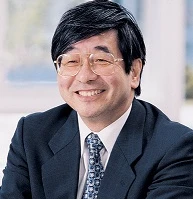 | Prof. Junzo Watada Professor Emeritus Waseda University, Japan | ICIEICT26-SSN-2: Advanced Technology in Business Management and Corporate Finance Please select this track name when you submit your paper in MS-CMT Topics: - Big data and data science in management - Digital impacts for Business management - Digital Tech and Innovation - Decision support systems - Big data in Green finance - Decision making and Entrepreneurship - Green Innovation - Knowledge discovery and data mining - Machine learning in Business Modeling - Entrepreneurship and Big Data - Digital Tech and Sustainability - Green Accounting and Sustainability - Collaborative Innovation and Big Data - Sustainability and Governance |
 | Prof . Latif Ladid University of Luxembourg/SnT, Luxembourg | ICIEICT26-SSN-3: Blockchain and its best Use Cases Please select this track name when you submit your paper in MS-CMT Topics: Blockchain as an end to end Internet application requiring routable IP address space to identify the source and destination IP addresses for better traceability and transparency where needed. Now since the current Internet Protocol version 4 (IPv4) has run out of routable address space back in February 2011, the new Internet Protocol version 6 (IPv6) comes with a virtually unlimited address spaces with 2 to the power of 128 (340 Trillion Trillion Trillion) address space restoring thereby the end to end model offering routable address space for applications like Blockchain to scale. The use of new IPv6-based technologies such as Multicast (BIERv6) and Segment Routing over IPv6 (SRv6) enhances further the deployment of Blockchain, unlocking new applications of the Blockchain technology have extended to various social and economic solutions in trade and supply chain management, financial services, manufacturing, art and media, smart cities, property and title transfers, management of the integrity of elections, and improving the quality of healthcare while reducing the risk of errors, as well as many others. |
 | Prof. Dr. Abdel-Badeeh. M. Salem Professor of Computer Science, Faculty of Computer and Information Sciences, Head of Artificial Intelligence and Knowledge Engineering Research Labs Ain Shams University Egypt | ICIEICT26-SSN-4: Machine Learning for Processing Brain Images Please select this track name when you submit your paper in MS-CMT Brain tumor is one of the most common major causes for the increase in Mortality among children and adults in the world. Many different types of brain tumors exist. Some brain tumors are noncancerous (benign), and some brain tumors are cancerous (malignant). Early detection of the brain tumor is very important andthe motivation for further studies. In the brain magnetic resonance imaging (MRI), the tumor may appear clearly but for further treatment, the physician also needs the quantification of the tumorarea. The computer and image processing techniques can provide great help in analyzing the tumor area. On the other side, computer-aided detection (CAD) has beendeveloping fast in the last two decades. The main idea of CAD isto assist radiologists in interpreting medical images by using dedicated computer systems to provide ‘second opinions’. Studies onCAD systems and technology show that CAD can help to improvediagnostic accuracy of radiologists, lighten the burden of increasingworkload, reduce cancer missed due to fatigue, overlooked ordata overloaded and improve inter- and intra-reader variability. The final medical decision is made by the radiologists. Consequently, radiologists expectthat CAD systems can improve their diagnostic abilitiesbased on synergistic effects between the radiologist and thecomputer with medical image analysis and machine learning techniques. With the advance of machine learning (ML) techniques and computational intelligence (CI) algorithms , computer-aided detection attracts moreattention for brain tumor detection. It has become one of the majorresearch subjects in medical imaging and diagnostic radiology.CI and ML became very important in extracting meaningful relationships and making accurate prediction in many fields. In the area of processing the brain images, Computer Aided-Diagnosis (CAD) systems are basically relied on different machine learning techniques in all its stages to implement a system that can help the radiologists by providing a second opinion that can assist in detection and diagnosis of brain tumors based on imaging techniques that are widely used in clinical care. Magnetic resonance imaging (MRI) is an imaging technique that plays a vital role in detection and diagnosis of brain tumors in both research and clinical care for providing detailed information about the brain structure and its soft tissues. This session is devoted to discussion of current research of the ML techniques and Artificial intelligence (AI) methodologies for developing intelligent CAD Systems.The goal is to provide a forum for the exchange of ideas between practitioners from neuroscience, cognitive science, physicians, and computer scientists, and knowledge engineers to address the important issues in those areas. Papers related to methodologies, techniques and applications in brain informatics, telemedicine, and neuro-imaging technologies are especially solicited. The topics of interest include, but are not limited to: • Smart techniques for developing CAD systems • Smart brain imaging techniques • Biomedical Signal and Image Processing • Machine Learning for Signal Processing • MRI Image acquisition and preprocessing • Intelligent segmentation techniques • Pattern recognition techniques • intelligent feature extraction approaches • Smart classification techniques • Classification of Brain MRI for Alzheimer's Disease • Neural Networks for Brain Tumors • Classification using Deep Learning |
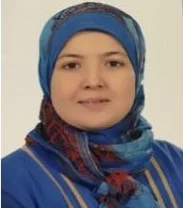  | Prof. Dina M. Ibrahim Department of Information Technology, College of Computer, Qassim University, Buraydah Saudi Arabia Dr. Rasha M. Abou Samra Assistant Professor of Remote Sensing and GIS - Faculty of Science- Damietta University Egypt | ICIEICT25-SSN-5: Current Trends in Information and Communication Technology Please select this track name when you submit your paper in MS-CMT Objectives and Motivation In the context of the rapid deployment of the digital communication technologies, the opportunities arising from developments in Information and Communication Technology (ICT) are very promising, improving competitiveness and innovation in industry and meeting the demands of society and the economy. Communication Technology is one of the most important connectivity technologies required by today's business organizations and Internet of Things (IoT) systems, ranging from smart home appliances to smart city systems. In addition, this session covers a large number of topics and applications: from wireless networking technologies to mobile information systems. Furthermore, security of wireless and mobile environment, protocols for wireless and mobility, internet infrastructures and applications, and future in mobile systems. This Special session aims to brings together efficient international academic scientists, young researchers, and students making the congress a perfect platform to share experience, gain and evaluate emerging technologies in ICT research across the globe. Information and communication technologies (ICTs) are considered enablers of the 2030 Agenda for Sustainable Development. Their application and diffusion in all sectors provide new solutions to overcome development challenges. This special session aims to bring academic scientists, researchers, and industry experts together to exchange and share their experiences and research results on all aspects of ICT. The conference provides a premier platform for encouraging young researchers and educators to present and discuss the most innovative ideas and research findings, as well as challenges encountered and solutions adopted in the fields of ICT. Scope and Interests (not limited to) • Cloud and Big Data Analytics • Image and video Processing • Communication Technology and Systems • Wireless Communication and Internet of Things • Computer Network and Architecture • Information Security • Robotics and Artificial Intelligence • Intelligent System and Human Computer Interaction • Machine Learning and Intelligent Systems • Wireless networks protocols • Telecommunications in Smart Cities • Network Security and Wireless Communication • Software Development Methodologies • Cloud Applications • Big Data Analysis • Image processing • E-Learning Technologies • Educational Data Mining • Emerging Technologies in Smart Cities • Internet of Things (IoT) • Wearable Technologies • Online Learning Platforms • Mobile/cloud computing • Location-based monitoring |
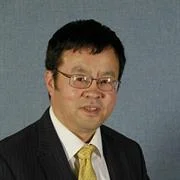 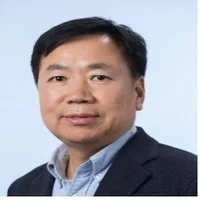 | Prof. Dr. Luigi Vladareanu Institute of Solid Mechanics of the Romanian Academy, Romania Prof. Dr. Hongnian Yu Edinburgh Napier University, UK Prof. Dr. Zeng-Guang Hou Institute of Automation, Chinese Academy of Sciences, China | ICEICT26-SSN-6: Advanced Intelligent Control in Robotics and Mechatronics Please select this track name when you submit your paper in MS-CMT Topics: Robotics and Mechatronics; Intelligent Control Systems; Intelligent Learning Control; Intelligent Control Architecture; Hierarchical Intelligent Controllers; Hybrid Control Systems; Intelligent Information Fusion, Learning and Adaptive Sensor Fusion, Neural Networks and Applications, Neural and Fuzzy Techniques, Intelligent User Interface, Fuzzy Logic and Learning, Genetic Algorithms; Biologically Inspired Systems; HAM (Human Adaptive Mechatronics); Robotics and intelligent control; Applied artificial intelligence; Data analysis; Data sciences with applications in digital healthcare and manufacturing systems; Applications of emerging technology, such as RFID, wireless technology, etc. into healthcare and manufacturing systems |
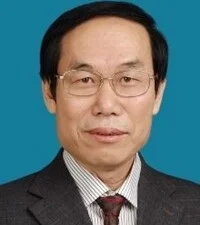  | Prof. Dr. Luigi Vladareanu Institute of Solid Mechanics of the Romanian Academy, Romania Prof. Dr. Hongbo Wang Academy for Engineering and Technology, Fudan University, China Prof. Dr. Yongfei Feng Ningbo University, China Prof. Jianye Niu Yanshan University China | ICIEICT26-SSN-7: Advanced Intelligent Control in Robotics Please select this track name when you submit your paper in MS-CMT Topics. Advanced intelligent control; Robot control; Rehabilitation; Mobile robots; Intelligent sensor systems; New technologies; Adaptive sensor networks; Virtual and augmented reality; Intelligent remote control and communication; Advanced intelligent control; Rehabilitation robot; Service robot for the elderly; Intelligent sensor systems; Intelligent decision support systems; Upper and lower limb rehabilitation robot; Finger rehabilitation robot; Vascular intervention surgical robot; Assisting robots for the disabled and the elderly; Walking robots with a parallel leg mechanism; Nursing robots for transporting patients; Intelligent robot control; Cheetah-inspired quadruped robot; Monocular vision; Human joint angle measurement; Dynamics modeling of human–machine coordination; Visual detection method; Hand disability. |
| Dr. Zelalem Mengistu Associate Professor - Information Systems Department Bay Atlantic University (BAU) Washington, D.C. USA | ICIEICT26-SSN-8: Current Trends/Advanced Topics in Information and Communication Technology Please select this track name when you submit your paper in MS-CMT Objectives and Motivation In the context of the rapid deployment of the digital communication technologies, the opportunities arising from developments in Information and Communication Technology (ICT) are very promising, improving competitiveness and innovation in industry and meeting the demands of society and the economy. Communication Technology is one of the most important connectivity technologies required by today's business organizations and Internet of Things (IoT) and Internet of Medical Things (IoMT) systems, ranging from smart home appliances to smart city systems and medical devices/applications. In addition, this session covers a large number of topics and applications: from wireless networking technologies to mobile information systems, supply chain risks, and quantum cryptography. Furthermore, security of wireless and mobile environment, protocols for wireless and mobility, internet infrastructures and applications, and future in mobile systems, among other things. This Special session aims to bring together international academic scientists, young researchers, and students making the congress a perfect platform to share experience, gain insights and evaluate emerging technologies in ICT research across the globe. Scope and Interests include, but are not limited to: • Quantum cryptography • Cloud and Big Data Analytics • Supply chain cyber risks • Advanced Persistent Threats (APTs) • Communication Technology and Systems • Smart city, Internet of Things (IoT), and Internet of Medical Things (IoMT) • Computer Network and Architecture • Zero Trust security model • Cyber Threat Modeling • Detecting Indicator of Compromises (IOCs) • Information/Cloud Security • Risk management and mitigation • Development and Operations (DevOps) and Machine Learning Operations (MLOps) • Robotics and Artificial Intelligence • Intelligent System and Human Computer Interaction • Machine Learning and Artificial Intelligence • Wireless networks protocols • Telecommunications in Smart Cities • Cybersecurity legal and ethical issues •Cyber diplomacy • Metadata |
 | Dr. Melissa M. Sahl (chair) Instructor - Information Systems University of Maryland Baltimore County Baltimore, MD Dr. Mohammad Samarah (co-chair) Professor of Practice – Information Systems University of Maryland Baltimore County Balitmore, MD USA | ICIEICT26-SSN-9: Ethics in Computing and Software Engineering (ECSE) Please select this track name when you submit your paper in MS-CMT Objectives and Motivation Software intensive devices are increasingly deployed in our world. Some are obvious and many are much less so to the general public. This raises questions about ethical use such as privacy, data, hardware resource use, transparency, and rights. Software should be ethical, reliable, and beautiful. Toward this endeavor, ethical aspects of software should be considered first and foremost. It is the goal of this session to discuss how to develop and implement ethical software in consideration of users, developers, politics, and society as a whole. Scope and Interests (not limited to): • Software and computing ethics • Privacy policies in software • Terms of service in software • Privacy in software and software-intensive hardware • Sustainability of hardware usage by software • Standards, regulations, and legal aspects of software and computing ethics • Software and computing ethics education |
    | Pr. Mohamed Oubibi Smart learning Institute of Beijing Normal University, College of Education, Beijing Normal University, China Pr. Katsiaryna Hryshayeva Beijing Foreign Studies University, Beijing, China Pr. Antony Fute Yulin University, Yulin, Shaanxi, China Pr. Atif Saleem Huaibei Normal University, Anhui, China | ICIEICT26-SSN-10: Educational Innovation through Technology Please select this track name when you submit your paper in MS-CMT Objectives and Motivation Artificial Intelligence (AI), Augmented Reality (AR), Virtual Reality (VR), and Information and Communication Technology (ICT) in education represent a paradigm shift in the way learning is approached and experienced. These technologies create immersive, interactive, and personalized educational environments, enhancing both teaching and learning processes. AI in education tailors the learning process to individual student needs, employing adaptive algorithms to customize content and pace. This technology also assists educators through automating administrative tasks and providing insightful data analytics on student performance. Meanwhile, AR and VR technologies are transforming traditional learning environments into immersive and interactive spaces. As these technologies become increasingly integrated into educational systems, they hold the promise of creating more personalized, efficient, and engaging learning experiences. However, addressing challenges such as equitable access, maintaining digital privacy, and ensuring the security of these systems is essential to fully realize their potential in transforming education. This session aims to bring together researchers, academicians and practitioners for discussion and exchange of ideas on the latest concepts, frameworks, theoretical and applied developments, simulation and experimental results in this field of interest. Scope and Interests (not limited to) Topics for submission include, but are not limited to: • Immersive learning with VR/AR /MR • Big data and learning analytics • AI in learning • Microlearning • Mobile/Ubiquitous learning • Gamification innovation • Learning engagement in online learning community • Video-assisted learning in distance learning conditions • Assessment and research • Multidisciplinary/Interdisciplinary learning or teaching • STEM/STEAM education • Innovation of language teaching in digital learning environment • Other topics related to technology integration into instructional design, curriculum, and evaluation. Scientific committee • Pr. Antony Fute, Yulin University, China • Pr. Katsiaryna Hryshayeva, Beijing Foreign Studies University, China • Pr. Atif Saleem, Huaibei Normal University, China • Pr. Mohamed Oubibi, Beijing Normal University, China • Dr. Tommy Tanu Wijaya, Beijing Normal University, China • Dr. Alemi Sayed Hussain Agha, Zhejiang Normal University, China • Dr. Kaixin Bao, Zhejiang Normal University, China • Yangyang Li, Zhejiang Normal University, China • Dr. Azziz Bichoualne, Zhejiang Normal University, China • Pr. Mustapha Bassiri high normal school of casablanca. hassan ii university of casablanca (uh2c). |
 | Prof. (Dr.) Belaaouad Said Chemistry department Laboratory of Physical Chemistry of Materials Faculty of Sciences Ben M'Sick Hassan II University Casablanca Morocco | ICIEICT26-SSN-11: Materials - Energy and Technology Please select this track name when you submit your paper in MS-CMT Objectives and Motivation The purpose of this special session is part of a major effort to unite all the actors involved in the research and development of innovative materials, applied to the knowledge and development of these materials, which exhibit energetic properties, magnetic etc. Understanding, knowing, preserving, restoring, innovating are the watchwords of materials science. The three key aspects: Materials - Energy and Technology are essential themes given the current and future challenges of the energy and technology transition in relation to sustainable development approaches (eco-materials and sustainable construction). This international conference will thus enable scientists and industry to not only shed light on the links between the themes dedicated to the Energy-Technology system, which are linked to the construction of innovative materials, but also to take stock of the latest advances. Scientists in the field of material sciences and their fields of application. The aim would be to bring together energies and multi-disciplinary potentialities. This is an opportunity to create a wide space of exchanges and reflections involving both researchers from various scientific fields: chemistry, biology, materials, mechanics, thermal, acoustics, plastics, civil engineering, sustainable development, etc. Scope and Interests (not limited to) The main objective of the session "Materials - Energy and Technology" is to share, discuss and exchange the latest research: theoretical and praxeological for the construction of Innovative Materials. Authors are invited to submit original research papers that propose new methodologies, approaches and research directions, covering a variety of subjects in the fields of Materials Science in relation to technical processes and technological / environmental sciences. Submissions for this special session should address, but are not limited to, the following or related topics: • Nanomaterials • Structural Materials • Materials chemistry and physics • Synthesis and processing • Polymer and composite materials • Solar Energy • Wind Energy • Heat storage for solar thermal power plants • The science of materials • Materials for energy • Materials Engineering • Renewable Materials and Energies • Energy Storage • Waste Management Technique, recycling and environment • Material processing technology • Innovative recycling technologies • Environmental aspects of waste treatment technologies waste • Photovoltaic • Technical / technology of treatment and characterization of Materials. • Choice of Materials / Eco-friendly Building Materials / Design / Development Processes / Lifespan. • Bio Composite Materials. • Materials production technologies / waste recycling. Scientific committee • Pr. Said Belaaouad, Faculty of Sciences Ben M'sik, Hassan II University Casablanca Morocco • Pr. Said Benmokhtar, Faculty of Sciences Ben M'sik, Hassan II University Casablanca Morocco • Pr. Youssef Naimi, Faculty of Sciences Ben M'sik, Hassan II University Casablanca Morocco • Pr. Mailka Tridane, Regional Center of Education and Training trades. Casablanca Morocco |
 | Dr. Arif M Ansari Professor- Data Science and Operations Department Marshall School of Business, University of Southern California Los Angeles, California, USA | ICIEICT26-SSN-12: Emerging Business Applications using AI, Machine Learning and Analytics Please select this track name when you submit your paper in MS-CMT Objectives and Motivation AI has become the hottest topic among researches, companies and general public with the advent of Open AI and similar platforms, the opportunities arising from GenAI are very promising. They improving competitiveness and innovation in industry and will transform society and the economy. AI is one of the most important technologies showing substantial amount of improvement to today’s business organizations and new revenue generating opportunities. It can be applied at various business operations and other technologies. This session covers a large number of topics in AI and Business application. This Special session aims to brings together eminent international academic scientists, young researchers, and students making the congress a perfect platform to share experience, gain and evaluate emerging AI technologies in Business from research to implementation across the globe. Scope and Interests (not limited to) • Business Application of AI and Big Data Analytics • AI based Image and video Processing for Business Application and Content Creation • Business process enhancement using AI and Internet of Things • Business Enhancement using Robotics and Artificial Intelligence • Intelligent System and Human Computer Interaction • Emerging Business Application using AI, Machine Learning, Reinforcement Learning and Analytics • Multi-model methodology to solve ill-defined or semi-defined or well-defined business problems • AI-enabled Smart Cities and Urban Planning • Personalization and Recommendation Systems in E-commerce Using AI • AI-powered IoT Sensors for Predictive Maintenance • Cloud Computing and AI for Scalable Data Processing • Generative AI – Supply and Demand from Content Creation perspective |
 | Dr. Fairouz Zendaoui Laboratoire de Recherche en TIC, Ecole Nationale Supérieure des TIC et de la Poste (ENSTICP), Algiers, Algeria. | ICIEICT26-SSN-13: Building, Scaling and Securing Modern Cloud Infrastructure Systems Please select this track name when you submit your paper in MS-CMT Objectives and Motivation Cloud computing is a cornerstone of modern digital ecosystems, enabling scalable, resilient, and intelligent infrastructures for data-driven and distributed applications. Current trends such as cloud-native architectures, hybrid and multi-cloud systems, edge-to-cloud continuum, and AI-driven automation are redefining infrastructure design, operation, and optimization. This special session brings together researchers, PhD students, industry professionals, and practitioners to share advances, research results, and practical experiences in cloud technologies. It welcomes theoretical contributions and industrial applications addressing next-generation cloud systems, with a focus on intelligent, autonomous, and sustainable infrastructures. The session encourages research on AI-enabled cloud operations, self-managing systems, observability-driven platforms, and energy-efficient cloud computing, fostering collaboration between academia and industry. Scope and Interests (not limited to) • Virtualization, Cloud Resource Management, and Cloud-Native Infrastructures. • Intelligent Distributed Systems, Cloud Networking, and Edge–Cloud/Hybrid–Multi-Cloud Computing. • Scalable Cloud Storage and Data Platforms. • AI-Driven Cloud Automation, DevOps, and Platform Engineering. • Cloud Security, Reliability, Observability, Autonomous Operations, and Sustainable Cloud Infrastructures. |
 | Dr. Shalini Gambhir Department of Artificial Intelligence and Data Science Vivekananda Institute of Professional Studies – Technical Campus (VIPS-TC), Delhi India | ICIEICT26-SSN-14: Artificial Intelligence, Data Science, and Intelligent ICT Systems Please select this track name when you submit your paper in MS-CMT Objectives and Motivation With the rapid advancement of Artificial Intelligence (AI), Data Science, and Intelligent Information Systems, Information and Communication Technology (ICT) has become a key driver of innovation across industries, healthcare, smart cities, and sustainable infrastructure. The integration of AI with ICT is transforming how data is processed, decisions are made, and intelligent systems are deployed in real-world environments. This special session aims to explore emerging trends in AI-driven ICT systems, focusing on machine learning, deep learning, data mining, and intelligent analytics for solving complex real-world problems. The session emphasizes applications in healthcare analytics, smart infrastructure, cybersecurity, and sustainable systems, reflecting the growing need for intelligent and adaptive technologies. The motivation behind this session is to provide a collaborative platform for researchers, academicians, and industry professionals to present innovative solutions, exchange ideas, and discuss challenges in designing scalable, efficient, and secure ICT systems powered by AI. Furthermore, ICT plays a crucial role in achieving the United Nations Sustainable Development Goals (SDGs) by enabling smart governance, digital transformation, and data-driven decision-making. This session highlights the role of AI and data science in building resilient, secure, and sustainable digital ecosystems. Scope and Interests (not limited to) • Machine Learning and Deep Learning • Data Mining and Predictive Analytics • Artificial Intelligence in Healthcare • Intelligent Data-Driven Systems • Big Data Analytics and Visualization • Natural Language Processing and Generative AI • Computer Vision and Image Processing • Cybersecurity and Data Privacy • Internet of Things (IoT) and Smart Systems • Cloud Computing and AI Integration • Smart Cities and Sustainable Infrastructure • Human-Computer Interaction and Intelligent Interfaces • Educational Data Mining and E-learning Technologies • Blockchain and Secure Data Systems • AI for Climate, Energy, and Sustainability • Explainable AI (XAI) and Ethical AI |
Important Dates
- Submission Deadline: October 31, 2026
- Notification of Paper Acceptance: November 23, 2026
- Early Registration: November 15, 2026
- Late Registration: November 30, 2026
- Conference Dates: December 4 -7, 2026